
research · ai · gtm-operations
AI Job Posting Statistics 2026: 30 Numbers from 294,483 Postings
22.5% of operations and GTM job postings mention AI in 2026, and 58.5% of those name no product or technology at all. A citable set of statistics from 294,483 job postings.
On this page
- Headline numbers
- How far AI language has spread, by role
- The specificity gap
- Implementation vocabulary, as a share of AI-mentioning postings
- AI adoption is rising inside operations roles
- AI assistants have entered the named tool stack
- Where the mandate lands
- What this data cannot say
- How this was measured
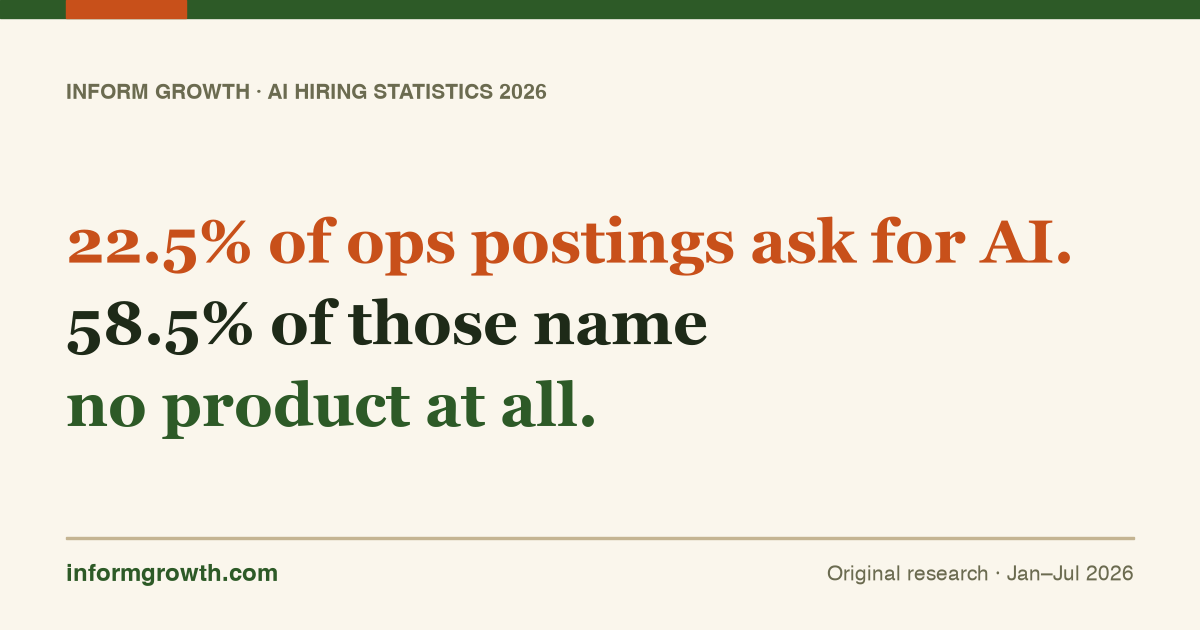
22.5% of operations and go-to-market job postings mentioned AI in 2026 — 21,628 of 96,328 analyzed postings collected between January 4 and July 26, 2026. Of those, 58.5% name no AI product and no implementation technology at all. The mandate is widespread and, so far, mostly unspecified.
Every figure below is free to cite with attribution to Inform Growth.
Headline numbers
| Statistic | Value |
|---|---|
| Job postings collected | 294,483 |
| Postings analyzed for text | 96,328 |
| Postings mentioning AI | 21,628 (22.5%) |
| AI postings that are generic (no product, no technology) | 58.5% |
| AI postings naming a specific AI product | 16.9% |
| Companies hiring an AI leadership role and an ops role in the same window | 200 |
| Median advertised salary, AI leadership roles | $210,000 |
How far AI language has spread, by role
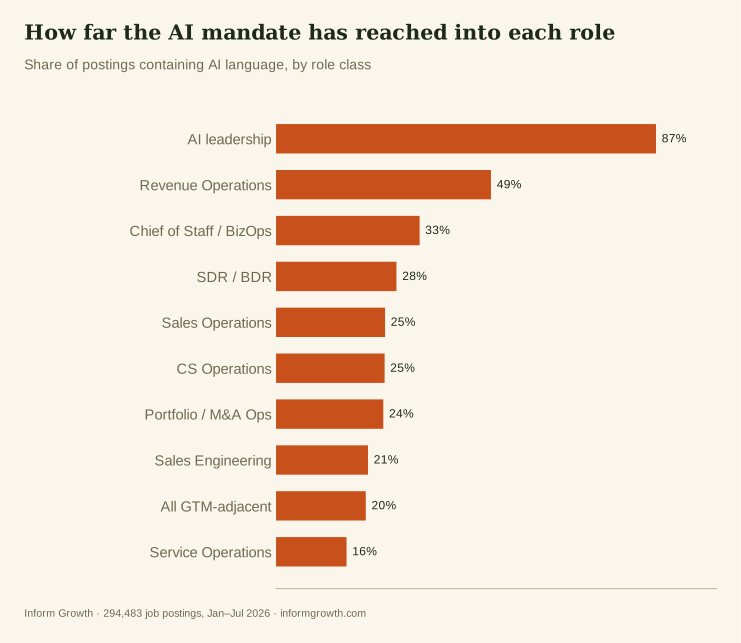
| Role class | Postings | Mention AI |
|---|---|---|
| AI leadership | 1,055 | 87% |
| Revenue Operations | 1,520 | 49% |
| Chief of Staff / BizOps | 2,359 | 33% |
| SDR / BDR | 4,823 | 28% |
| Sales Operations | 3,050 | 25% |
| CS Operations | 495 | 25% |
| Portfolio / M&A Operations | 265 | 25% |
| Sales Engineering | 1,176 | 21% |
| All GTM-adjacent roles | 81,268 | 21% |
| Service Operations | 317 | 16% |
The specificity gap
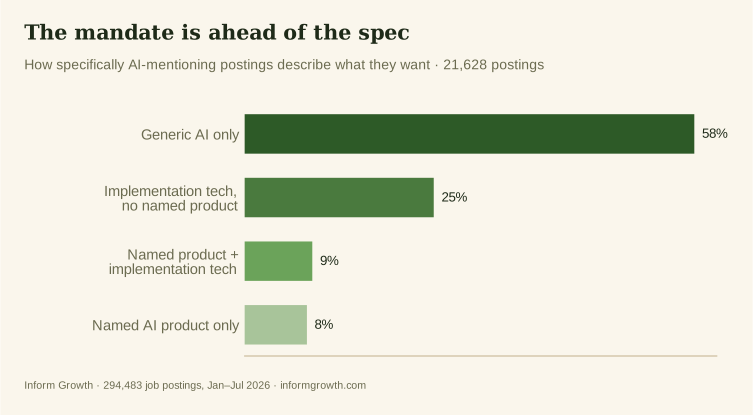
Classifying all 21,628 AI-mentioning postings by how concretely they describe what they want:
| Specificity | Share |
|---|---|
| Generic AI only ("leverage AI," "AI-driven") | 58.5% |
| Implementation technology, no named product | 24.6% |
| Named product and implementation technology | 8.8% |
| Named AI product only | 8.1% |
Even among dedicated AI leadership postings — Head of AI, Chief AI Officer — 32% name no specific product or technology at all.
Implementation vocabulary, as a share of AI-mentioning postings
| Term | Share | Postings |
|---|---|---|
| Agents / agentic | 25.1% | 5,423 |
| Large language models | 12.0% | 2,596 |
| Vector databases / embeddings | 3.4% | 743 |
| Prompt engineering | 3.3% | 708 |
| Retrieval-augmented generation | 2.8% | 606 |
| Fine-tuning / model training | 1.4% | 303 |
| Model Context Protocol (MCP) | 1.3% | 291 |
AI adoption is rising inside operations roles
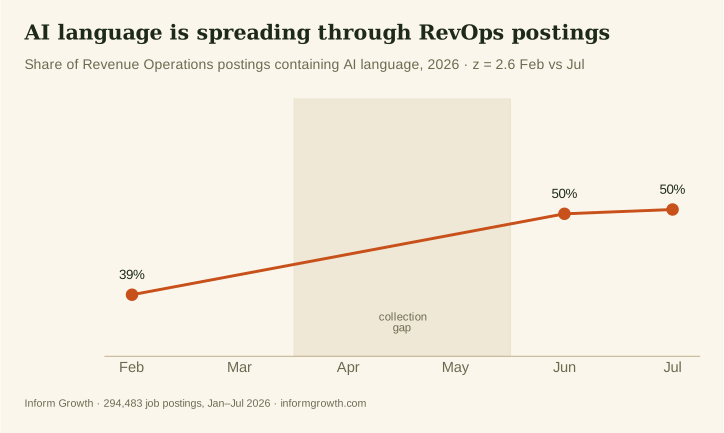
Holding the role class constant, the share of Revenue Operations postings containing AI language rose from 38.6% in February 2026 to 50.5% in July 2026 (two-proportion z = 2.6, significant). Collection paused in April and May, so the comparison runs February against summer.
AI assistants have entered the named tool stack
| Tool | Postings |
|---|---|
| Claude | 2,279 |
| ChatGPT | 1,395 |
| Microsoft Copilot | 1,149 |
Claude is now the sixth most-named tool across all analyzed ops and GTM postings, ahead of SAP and Jira.
Where the mandate lands
- B2B-context postings mention AI at 37.6%, against 19.7% for B2C
- The industry gradient runs from 48% in technology and internet down to 4% in construction
- Remote postings mention AI at 26%, onsite and hybrid at 20%
- Postings naming five or more tools mention AI at 58%; postings naming none, 16%
What this data cannot say
It measures language, not deployment. A posting that says "leverage AI" documents a stated intention, not a working system. Postings are also marketing documents and inflate scope. Trend claims cover seven months with a two-month collection gap and do not support seasonal or year-over-year conclusions.
How this was measured
These figures come from Inform Growth's 2026 study of 294,483 job postings, collected from public job boards (LinkedIn 54.7%, Indeed 45.1%) between January 4 and July 26, 2026, with a collection pause in April and May. Text analysis covers the 96,328 postings in target and GTM-adjacent roles with English descriptions of at least 300 characters. AI specificity classifies each AI-mentioning posting by named products and implementation terminology, with patterns constrained to avoid false positives on ambiguous acronyms. The pipeline is deterministic — dictionary and pattern matching, no model-generated statistics.
Read the full research: What 294,483 Job Postings Reveal About AI and Operations Hiring in 2026
Related: Does mentioning AI raise advertised salary? · AI adoption by industry · What Head of AI roles pay
Inform Growth builds and runs managed AI infrastructure for companies whose ambition has outrun their plumbing. Start here.
Frequently asked questions
What percentage of job postings mention AI in 2026?
22.5% of analyzed operations and go-to-market job postings mention AI — 21,628 of 96,328 postings collected between January and July 2026.
How specific are AI job postings?
Not very. 58.5% of AI-mentioning postings name no AI product and no implementation technology at all. Only 16.9% name a specific AI product.
How common is the Model Context Protocol in job postings?
The Model Context Protocol appears in 291 postings, or 1.3% of AI-mentioning postings — compared with 25.1% for agent and agentic language and 12.0% for large language models.
Is AI language in job postings increasing?
Yes. Holding the role constant, AI language in Revenue Operations postings rose from 38.6% in February 2026 to 50.5% in July 2026, a statistically significant increase (two-proportion z = 2.6).